
November & December in the Garden
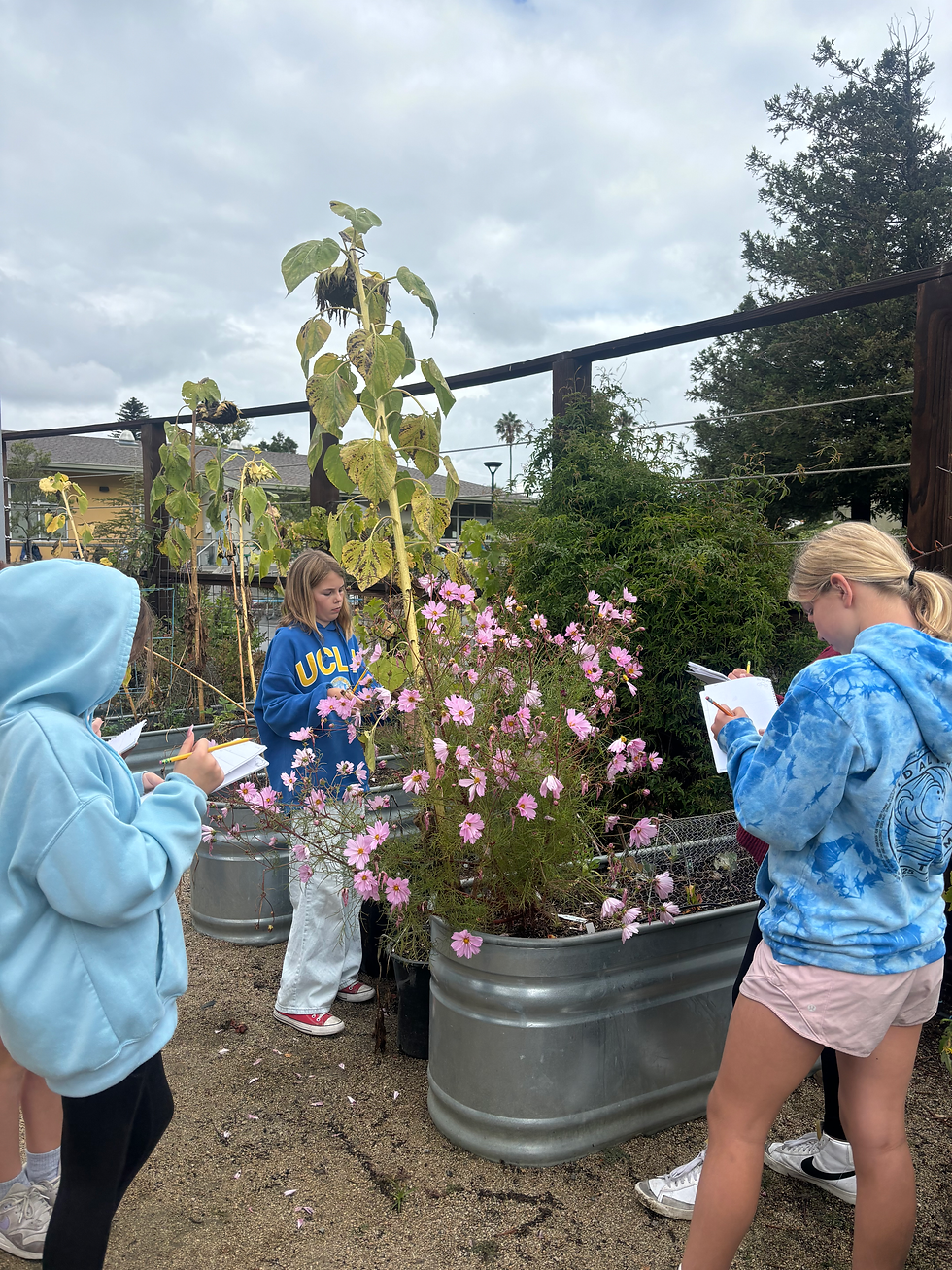
The final two months of the calendar year brought rain and cold into our outdoor classroom. Despite these less desirable conditions, our students got some very valuable science lessons in the garden.
Our garden education theme for the month was decomposition and soil. As vegetables and fruits finished their life cycles, flowers died back, and leaves fell from the trees, students got to witness what happens in a garden ecosystem in the winter season. At garden recess, students enjoyed tasting pomegranate seeds and planting new plants in the garden beds for the winter.
The 3rd-5th graders were challenged with the task of making soil… without using any soil or dirt. They quickly realized this was not possible, and that the missing “ingredient” was time- for everything to decompose. Students then got the opportunity to explore three decomposition stations: searching for decomposers in the garden, exploring the worm compost bin, and cutting compost into smaller pieces.
1st and 2nd graders each investigated a soil sample and wrote down everything they could find in their soil in order to answer the question: where does soil come from?
We then compared these “recipes” for soil with the soil composition diagram. Students were able to categorize everything they found in their samples into the four parts of soil: air, water, minerals, and organic matter. These students also then explored the three decomposition stations around the garden, discovering different methods of decomposition.
The kindergarten classes zoomed in and got the chance to spend time with one very specific decomposer in our garden: the compost worms.
They discovered that the worms eat our food scraps and make rich fertilizer for the garden. The kindergarteners practiced responsible and respectful handling of creatures by holding and observing the worms while keeping them safe.

Comments